
Pansies as Cut Flowers
If there’s one crop that manages to contradict itself by being both heartbreakingly delicate and ridiculously tough, it’s pansies. They’re the ultimate little workhorses of early spring; stretching, ruffling, trailing, and charming their way into every florist’s heart. In this post, I’m sharing everything I’ve learned from growing pansies specifically as a cut flower; stem length expectations, vase life, handling quirks, pricing realities, my favourite varieties for florists, plus all the growing tricks that help me get those epic 30–50cm stems. If you’ve been curious about whether pansies deserve a spot in your beds, here’s your deep dive.
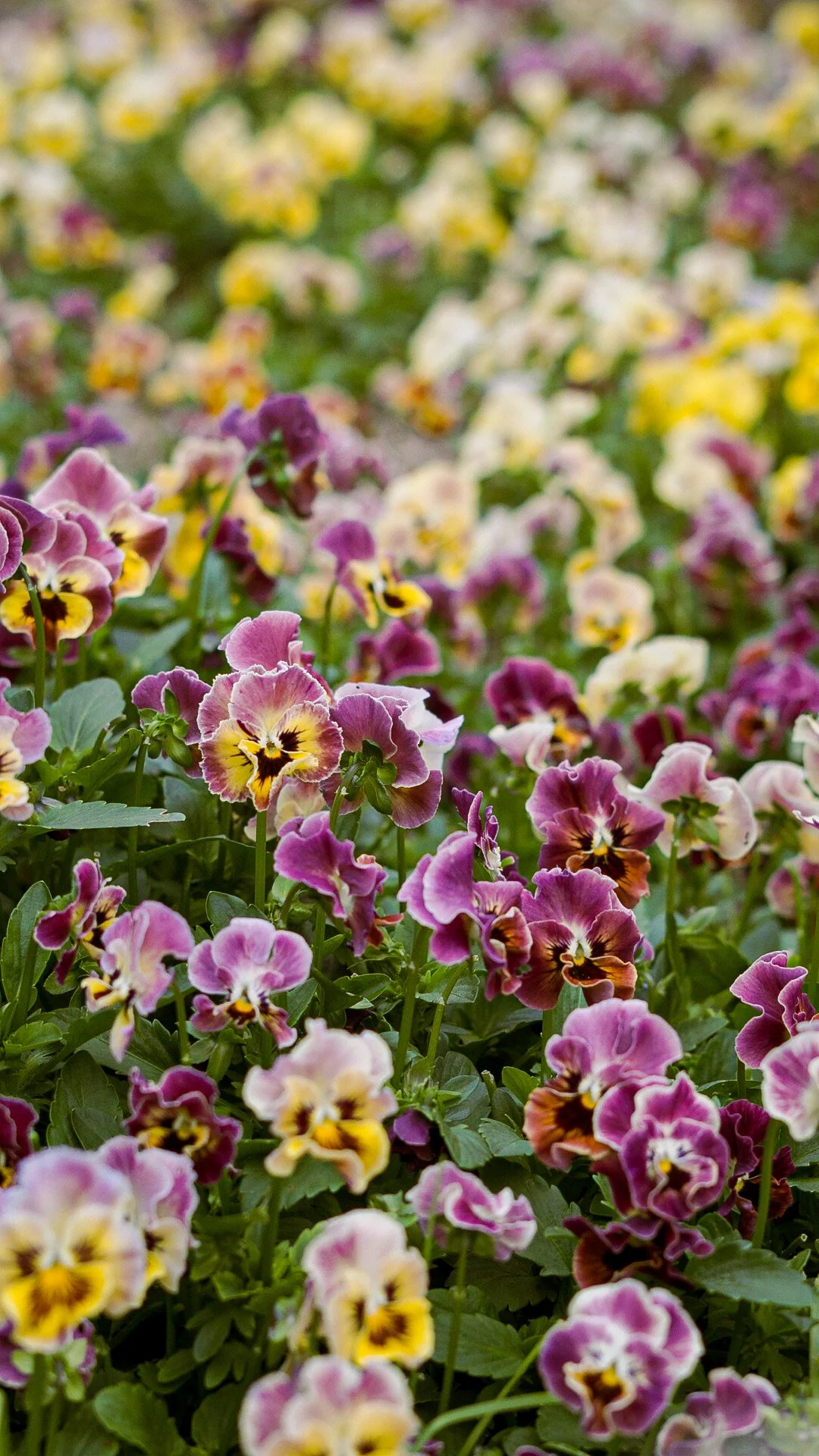
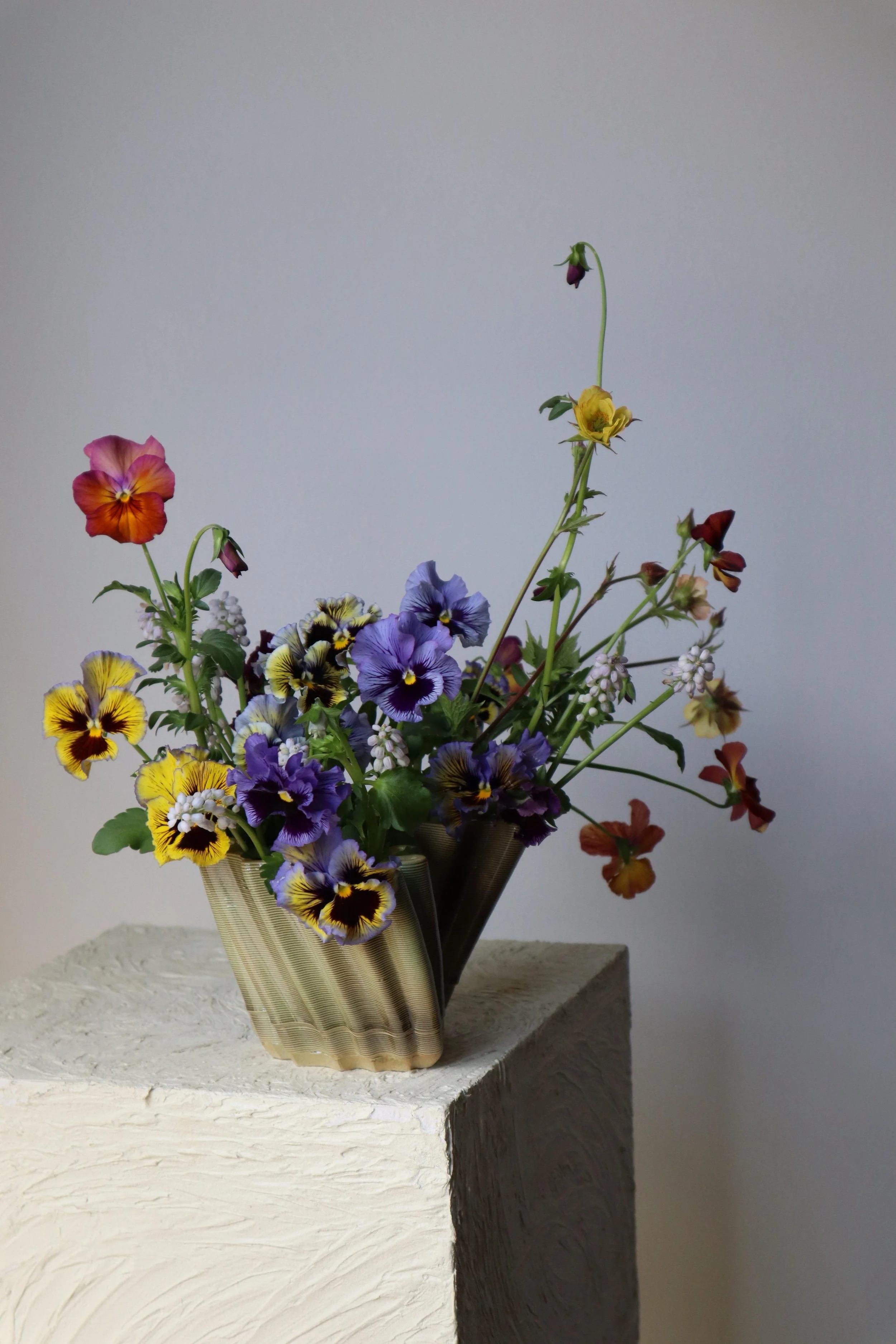
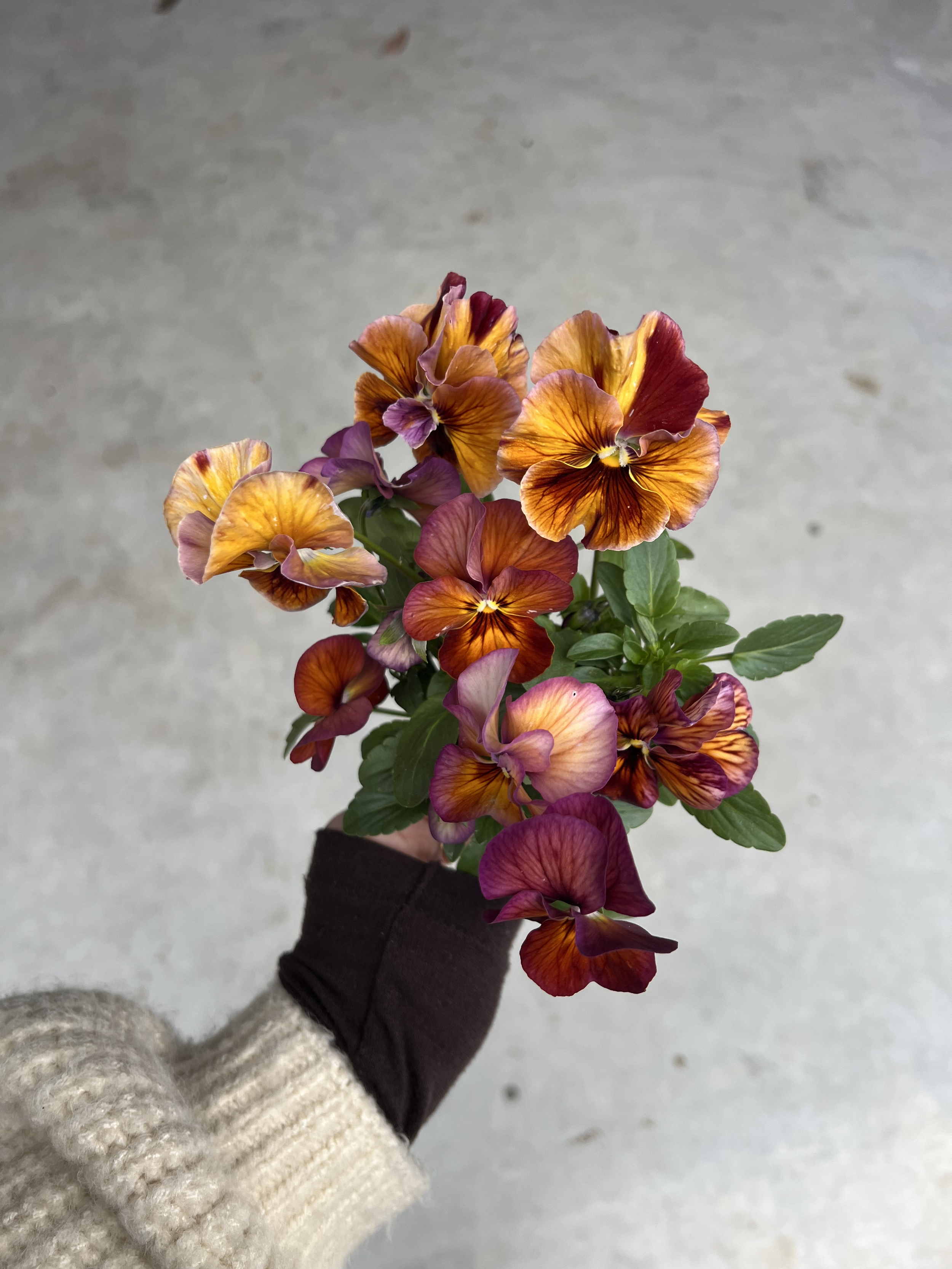
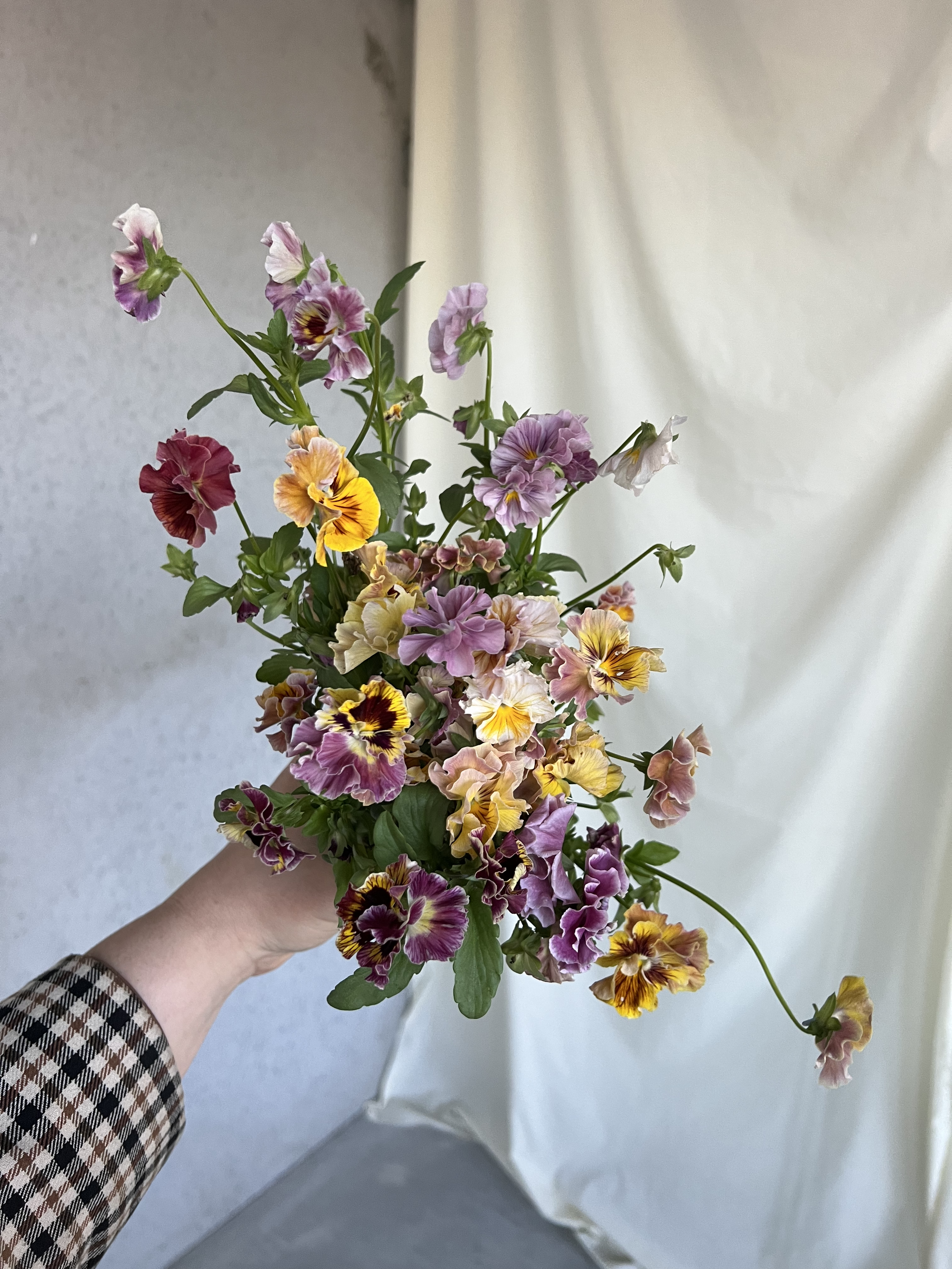
Left to right - 1. Viola Frizzle Sizzle Tapestry, 2. mix of Pansy Frizzle Sizzle Yellow Blue Swirl & Nature Mulberry Shades, 3. mix of Flamenco Terracotta & Nature Mulberry Shades, 4. Flamenco Terracotta.
Growing info:
For long stems by September, I plant my pansies in March. This means that if I’m starting from seed I need to do so in late Jan, which is a tricky time of year for seed starting with such high temps. Luckily pansies do fine being started in the shade so I keep my seed trays undercover on our veranda where they get very little direct light. A lot of sources will say that pansies need darkness to germinate but I haven’t found this to be true. They are such small seeds that they struggle to germinate if covered by too much soil so I actually surface sow them, lightly cover with vermiculate and cover with a humidity dome (I use under-bed storage tubs as my humidity chambers). Pansies don’t mind root disturbance and are very tough little seedlings so my preferred method of sowing is to broadcast sow the seeds in an open tray rather than a cell tray, and then prick them out into cell trays once they have a few leaves.
The best thing you can do to encourage good stem length from pansies is plant them super tight or amongst other plants so they have to stretch and fight for light. I plant mine 5cm apart and often along the edge of my beds with other crops in them. They also do great planted along the edge of a sweet pea bed as they will trail and climb in amongst them.
I always deadhead (technically livehead) for the first couple of months they are blooming, removing all blooms and buds so the plant can put it’s energy into establishing it’s root system and lengthening it’s stems. More dedicated growers than me will continue deadheading through the growing season but I don’t have the time and they do just fine without; mine just fizzle out a bit quicker than if I did. The reason for this is that the act of setting seed is the trigger for a plant to slow down in producing blooms because it has achieved it’s only goal, which is to reproduce.
When temps start reaching 30+ degrees (which for us can happen as early as Sept), I put shade cloth over my pansy beds that get afternoon sun but if I can, I try to plant them in areas they only get morning-midday sun. They are also quite thirsty plants but if I keep the water up to them and the afternoon sun off them, they will continue blooming until Dec but will usually die off for me (I’m talking brown and crispy) by Jan. In cooler climates, they will often pause flowering while they are stressed over summer and then continue again once it cools down.

Nature Mulberry Shades
My favourite varieties:
Not all pansies are created equal. Some have been bred not to stretch and lengthen as much as others naturally do. Some also have much thicker stems than others, which makes them a sturdier cut flower and easier to strip. These are a handful of my favourite cultivars:
Flamenco Terracotta - insane ruffles, sturdy stems, medium flower heads, and amazing stem length (40cm by end of spring)
Showtime/Moulin Rouge - large flower heads, sturdy stems, and amazing stem length (40cm by end of spring)
Chianti - ruffly, sturdy stems, earliest to stretch, and amazing stem length (40cm by end of spring)
Arkwright Ruby - insanely long stems (40-50cm by end of spring)
Imperial Antique Shades - large flower heads, sturdy stems, and good stem length (30cm by end of spring). These are one of the only varieties available as plugs from Ball Australia in this gorgeous wedding-friendly colour palette that I knew was a good cut flower from chatting with other growers. I always order a few trays of pansies from Ball as insurance in case my seed starting efforts don’t go to plan, and this one has been super popular with florists despite the stems being slightly shorter than others).
Frizzle Sizzle (all the colours are great) - this range comes in both pansy and viola form. The viola will stretch taller (40cm by end of spring) but has more wiry stems and smaller flowers. I personally prefer the pansy form of Frizzle Sizzle for it’s sturdier stems and larger flowers but they don’t get quite as tall (30cm by end of spring). These are also available as plugs from Ball Australia.
Other things to note:
Vase life & how they hold up out of water:
9-14 days. Pansies have a very impressive vase life for such a delicate flower. If there are unopened buds on the stem, they will continue to open in the vase. They even hold up well out of water for event work if well hydrated (within reason… a 30 degree day may not be advisable). If you find them drooping after being out of water for a few hours, they will perk back up if put in water to rehydrate.
Sellable stem length:
At the beginning of the season, I start including pansies on my wholesale availability list as soon as they get to 15cm tall. These are great for bud vases or shallow table arrangements but not much else. For me it’s usually late September that they start to really stretch and produce stems 30+cm tall that can be worked into bouquets and large arrangements.
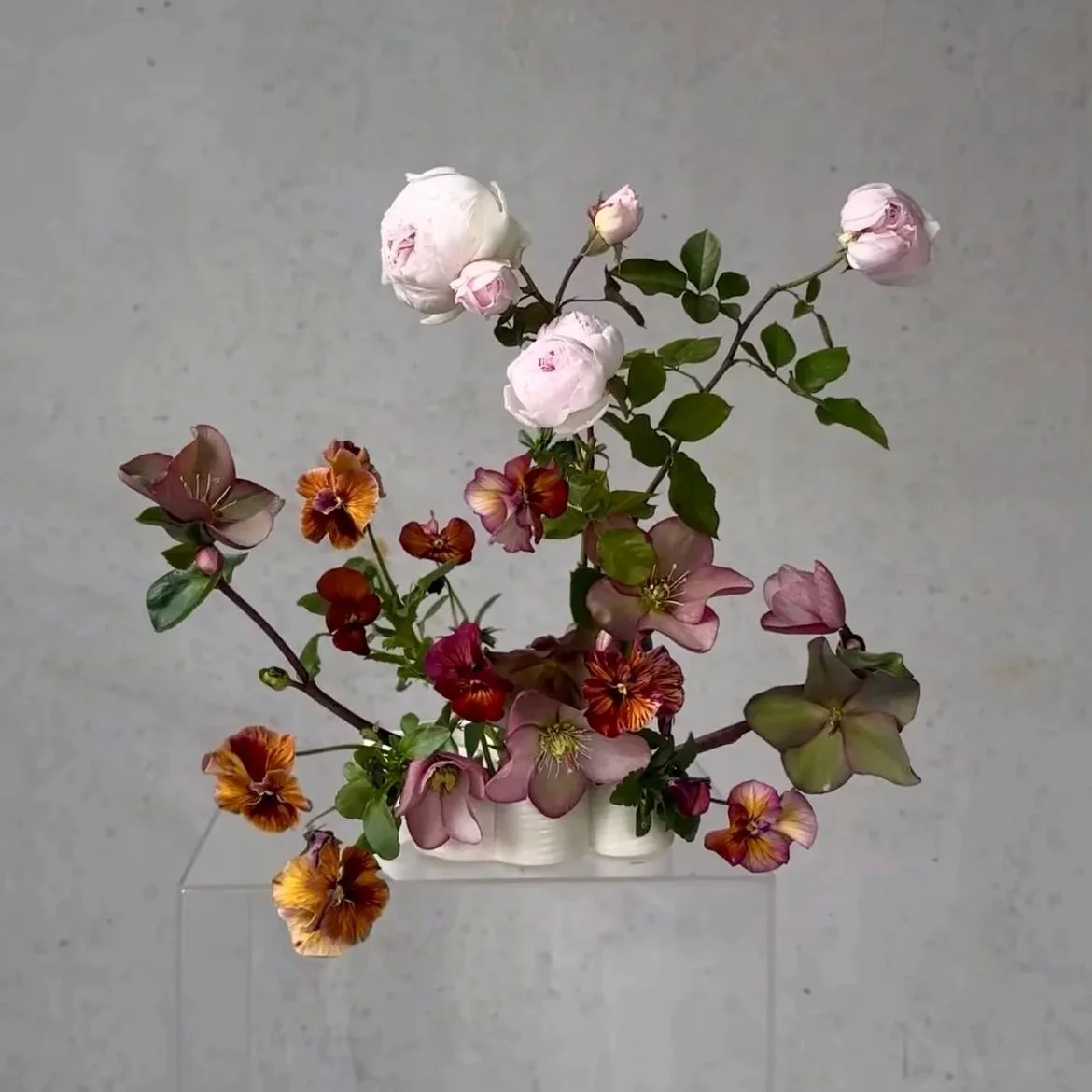
Designed by @filmandfoliage with 15cm stems.
Harvesting and handling:
Pansies are a little bit frustrating to harvest (see reason below in pricing info) so to make my life easier, I don’t use snips; I just use my thumb nail to pinch the base of the stem off or for extremely prolific varieties, I use snips to cut a whole handful at once. They can also be quite delicate and stems will snap if not handled carefully. I always pre-strip the leaves off the stems for my florists for this reason. If adding to a spiral bouquet, I’d suggest threading the pansy stems through at the end.
Pricing:
Pansies are a very labour intensive crop and we charge accordingly. Because they are a “trailing” plant, you can’t tell if a stem is long enough to cut just by looking at the plant; you have to follow the stem all the way to the base of the plant to feel whether the stem is long enough to cut yet. Once the stem is harvested, the act of stripping the stem is a very delicate one. The plants also require regular dead heading in their first two months of flowering to encourage growth and lengthening. Charging a high price for such a tiny bloom may seem crazy, but it’s what we have to do to keep growing pansies sustainable for us. And in our opinion (and the opinion of a lot of our florists), they are so worth it!
